Surrender. Renew. Restore. Remember.
An embodied journey inward—toward greater self-trust, connection, and wholeness.
A Place to Come Home to Yourself
I believe healing happens when we have both compassion and structure—a steady space where you can slow down, listen inward, and reconnect with yourself.
I’m rooting for you while helping you stay grounded with both feet on the earth.
My work is deeply embodied and depth-oriented, supporting people through trauma, burnout, neurodivergence, chronic pain, grief, relationship struggles, and the pressures of trying to fit into boxes that were never made for them.
Rather than asking you to become someone else, therapy can help you understand what your body, mind, and inner world are already communicating—and create a life that feels more truly your own.
Drawing from psychological training, mindfulness, body-based approaches, ancestral and symbolic wisdom, and a deep respect for the natural world, I help clients develop self-trust, agency, clarity, resilience, and a deeper sense of belonging.
Frequently Asked Questions
What types of therapy do you offer?
I offer individual, family, and couples therapy for adolescents and adults.
I work with people navigating trauma, burnout, grief, chronic pain, neurodivergence, identity, relationships, existential questions, spiritual experiences, and major life transitions.
Therapy can be a space to better understand yourself, regulate emotions, work through relational patterns, and develop a more connected relationship with your body and inner world.
What is your therapeutic approach?
My approach combines structure and sanctuary—a grounded, compassionate space for meaningful change.
I draw from Internal Family Systems (IFS), mindfulness-based therapy, somatic and body-based approaches, parts work, relational and attachment perspectives, and transpersonal psychology.
We move at a pace that respects your nervous system and your individual needs.
At the center of the work is learning to listen to yourself more deeply—not only intellectually, but through the wisdom of your body and lived experience.
Do you offer couples therapy?
Yes. Relationships can bring our deepest wounds to the surface—and also create profound opportunities for healing.
In couples work, we focus on rebuilding the foundation of the relationship, both within each individual and between partners.
We explore attachment patterns, protective parts, relational wounds, and family-of-origin experiences as they are expressed through the body, while building greater self-awareness, emotional regulation, communication, trust, and connection.
Rather than simply managing conflict, we work to create the emotional safety, embodied connection, and mutual understanding needed for deeper intimacy to thrive.
I believe in the possibility of lasting, meaningful love—and in creating the conditions that allow love, trust, and connection to grow.
Education & Training
A Multidisciplinary Path
My clinical work is informed by Mindfulness-Based Transpersonal Counseling through Naropa University, along with training in Internal Family Systems, Hakomi mindfulness-based therapy, Jungian-informed parts work, Gestalt therapy, somatic approaches, Brainspotting, breathwork, and psychedelic integration.
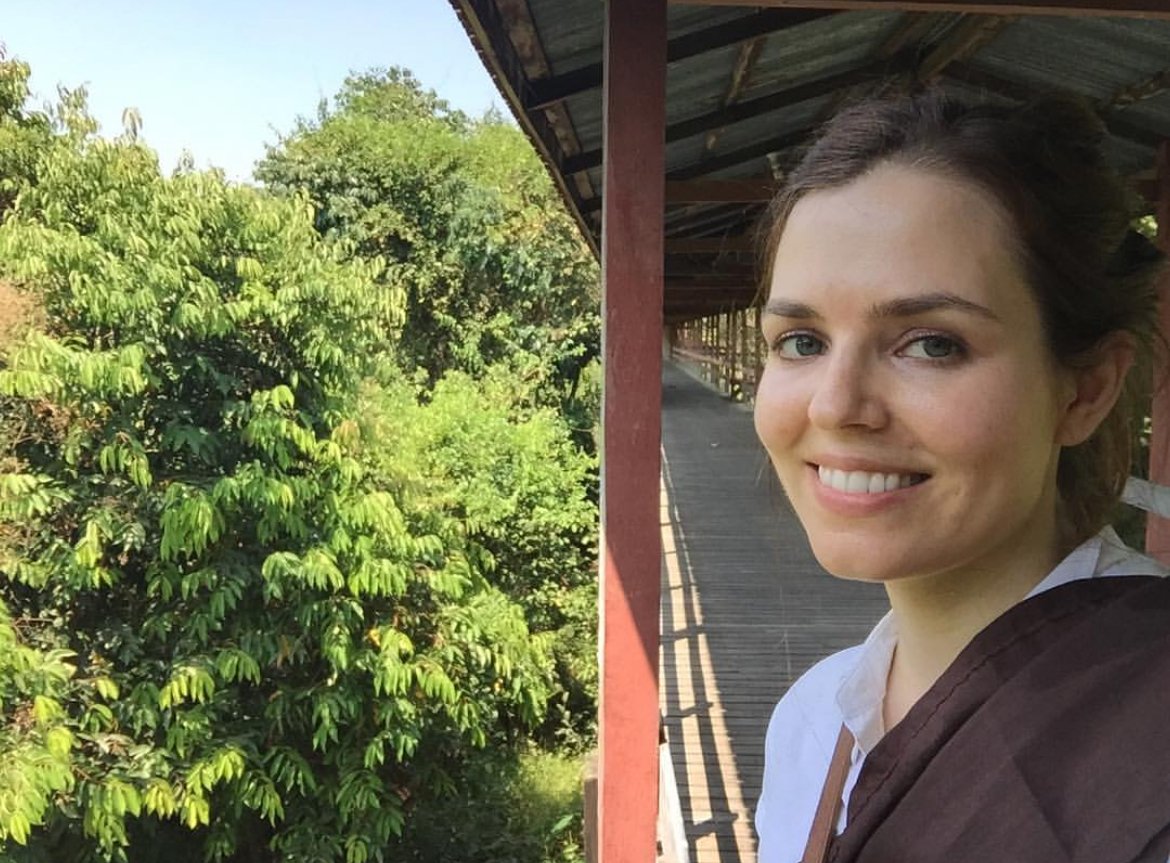
I also have more than 15 years of contemplative practice in the Theravada Buddhist Mahasi tradition, including training at Panditarama Monastery in Burma.
My background also includes undergraduate study in Biochemistry at the University of Minnesota and professional experience in scientific and adjacent fields.
This interdisciplinary path continues to inform my interest in the relationship between biology, the body, consciousness, and human experience.
I continue to pursue education and professional development so that my work remains grounded, ethical, and clinically responsible.
The Unseen
Some of the most meaningful parts of ourselves live beneath the surface.
Do you incorporate spiritual, ancestral, or symbolic work?
Yes, when it is meaningful to you.
Dreams, symbolism, ancestry, spirituality, intuition, and questions of meaning can sometimes be important parts of a person's healing process.
These areas are explored only with your consent and within the context of your clinical goals and personal beliefs.
The intention is not to tell you what your experiences mean, but to create space for you to explore them safely and develop your own understanding and relationship to them.
Can therapy support spiritual or existential experiences?
Yes.
Some people move through periods of profound questioning, spiritual emergence, loss of meaning, or experiences that are difficult to put into words.
Therapy can provide a grounded place to explore these experiences while remaining connected to everyday life, relationships, emotional stability, and practical support.
When physical or medical symptoms are present, psychotherapy can complement—but does not replace—appropriate medical care.
Body & Nervous System
Listening Beyond Words
Do you work with chronic pain and stress?
Yes. I work with people experiencing chronic pain, prolonged stress, burnout, grief, and nervous-system overwhelm.
We may explore how stress and emotion show up in the body, develop greater awareness of physical signals, and build practical skills for grounding, regulation, pacing, and resilience.
The goal is not to force the body to change, but to develop a more compassionate and collaborative relationship with it.
Who I Work With
I work with people seeking greater self-trust, clarity, connection, and alignment.
The Body
Trauma
Chronic pain
Stress
Burnout
Nervous-system overwhelm
The Self
Identity
Neurodivergence
Self-trust
Belonging
Life transitions
The Relationship
Attachment
Family
Intimacy
Relational patterns
Communication
I also work with people who are simply ready to understand themselves more deeply and live with greater intention.
The Journey
How quickly will I notice changes?
Every person is different.
Some people experience greater clarity or relief early in therapy, while deeper patterns often take time to understand and integrate.
Therapy is a collaborative process. From the beginning, the goal is to help you develop tools, awareness, and a stronger relationship with yourself—not to make you dependent on therapy.
Why come to therapy if nothing is “wrong”?
Therapy isn't only for crisis.
Sometimes we seek therapy because something inside us is asking for change—a relationship no longer feels right, a familiar pattern keeps repeating, we feel disconnected from ourselves, or we simply sense that there is more available to us.
Therapy can be a place to slow down, listen, remember, and choose what comes next.
What Does Healing Mean Here?
Healing does not mean becoming someone else.
It can mean becoming more fully present in your own life—understanding your patterns, listening to your body, making choices with greater awareness, strengthening your relationships, and reconnecting with parts of yourself that may have been overlooked or forgotten.
Surrender
what no longer needs to be carried.
Renew
what is ready to live.
Restore
what has been lost.
Remember
who you are.
Insurance & Payment
I currently accept some forms of insurance, including:
Aetna · Cigna · Cigna EAP · Kaiser Permanente · Kaiser Permanente Northwest · Premera Blue Cross · Regence · UnitedHealthcare · UnitedHealthcare EAP
Insurance coverage and benefits vary by plan. Please contact your insurance provider to confirm your specific mental health benefits and coverage.